+49 2661 916291

+49 2661 916291
Filtration, Sealing, Damping, and Protection
Higher Performance – refined foams through activated carbon and silicone impregnation as well as thermal densification
Foam is a material with potential – but only the right refinement turns it into a functional medium. We complement flexible PU foams with targeted process steps, elevating them to a new performance level: as a filter medium that separates gases and particles simultaneously; as a seal that maintains its shape despite heat and moisture; as a damping element that compensates for tolerances and durably absorbs vibrations.
Three refinements that turn foam into a functional medium.
What we do
PU foams are loaded with powder or granular activated carbon.
What you gain
Particle and gas filtration in one medium, low pressure loss.
What we do
Open-cell PU foams are permeated with silicone and cured.
What you gain
Permanently elastic under heat, steam, and cyclic loading.
What we do
Defined pressure and temperature control specifically densifies the foam.
What you gain
Adjusted hardness, damping, and pore structure for precise assemblies.
Particle and gas filtration in one medium, low pressure loss.
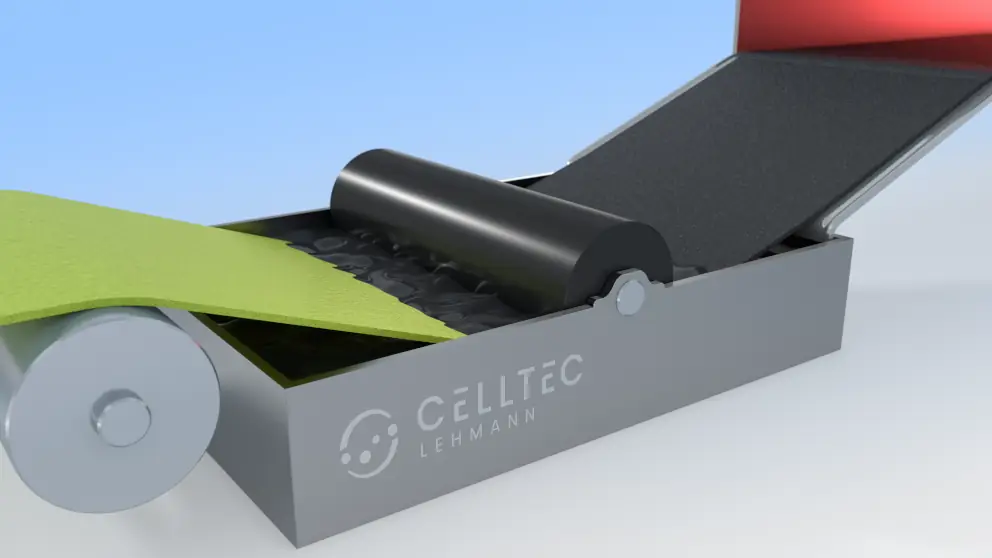
Open-cell PU foams are impregnated with technical activated carbon, turning them into compact filter media that separate particles while simultaneously binding gases, odors, and volatile organic compounds (VOC). Mechanical depth filtration and gas adsorption work within the same material – without a second filter stage, without additional installation height.
The result is space-saving, energy-efficient filter concepts with low pressure loss – ideal for industrial exhaust air, HVAC systems, automotive interiors, and devices with odor control. Powder (CellPAC) or granular activated carbon (CellGAC) are used specifically depending on installation height, service life, and pollutant load.
Permanently elastic under heat, steam, and cyclic loading.
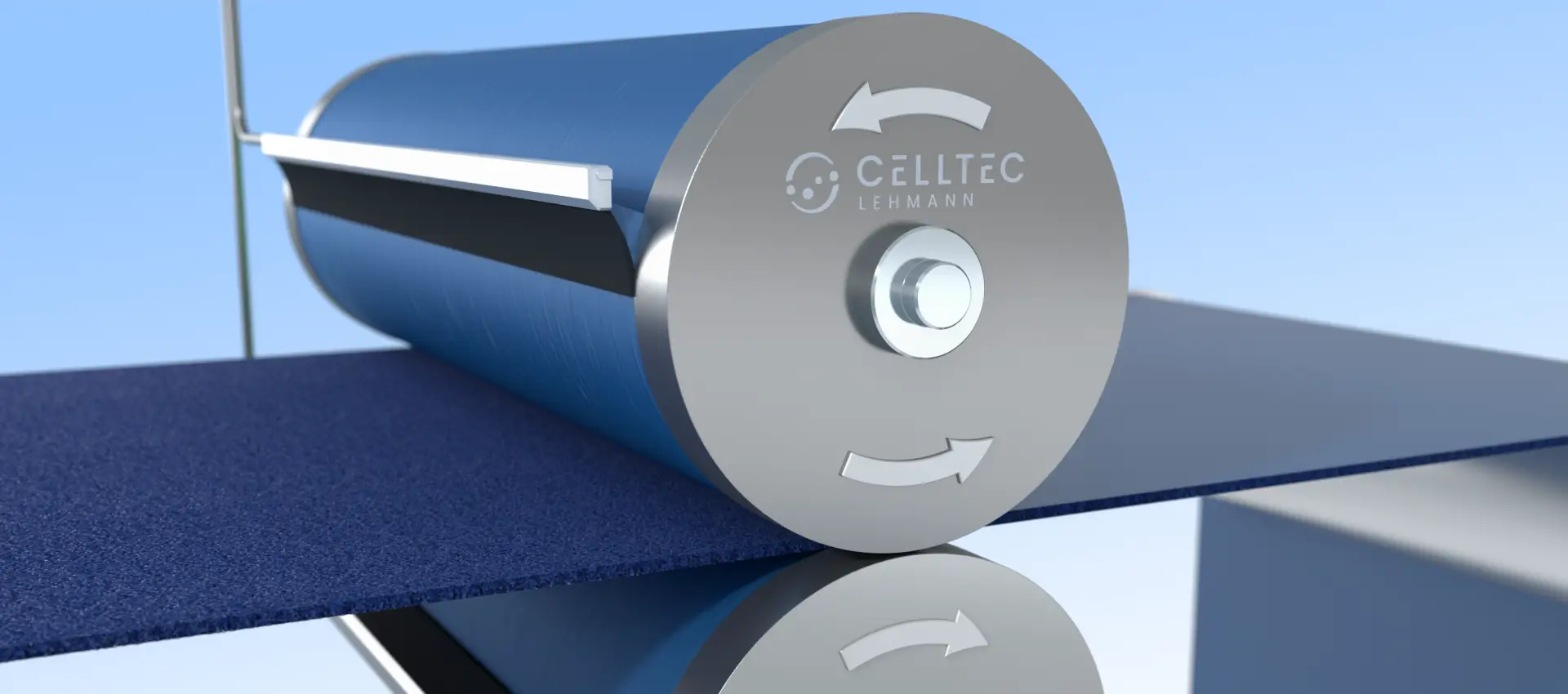
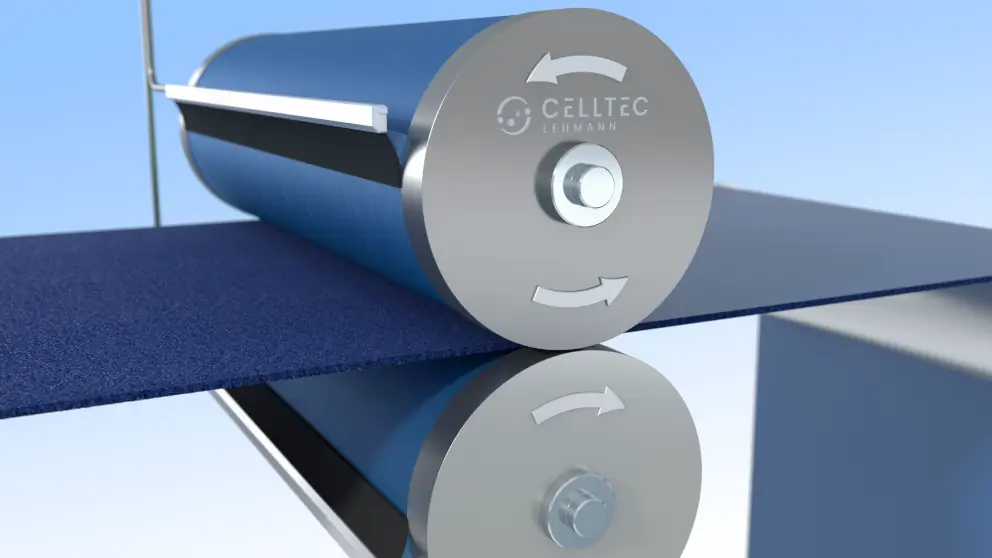
In silicone impregnation, the PU foam serves as an elastic, open-pored carrier structure. The penetrating silicone cross-links within the cell structure and raises the temperature, moisture, and aging resistance of the material to a significantly higher level – without losing flexibility.
The result is durable, dimensionally stable cushioning, sealing, and insulation solutions that remain elastic even under heat, steam, and cyclic pressure loading. Typical fields of application range from ironing board and household appliance padding to mechanical engineering and thermally stressed components in the automotive sector.
Adjusted hardness, damping, and pore structure for precise assemblies.
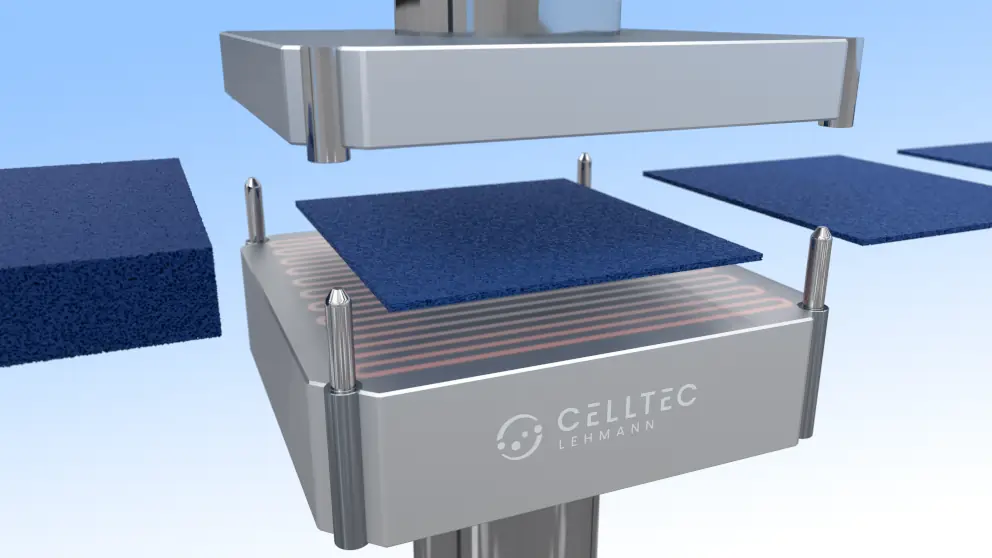
Through controlled pressure and temperature treatment, PU foams are specifically densified and their mechanical and physical properties are adjusted. Density, hardness, recovery behavior, and pore structure do not follow the raw material but rather the requirement profile of your component.
This creates foams with precisely defined elasticity and damping: they compensate for constructive tolerances, dampen vibrations, seal reliably, or store media such as liquids and gases. Application examples include battery pads, sealing and spacer elements, acoustic decoupling, and technical assemblies in industry and mobility.
Our refined foams are created within the quality and partner network of the CELLTEC Group. This guarantees you the same quality every working day – and the same commitment, whether for a prototype or a large series.

Certified: ISO 9001:2015, IATF 16949:2016, CCC China Certification, UL (Repackaging), EcoVadis, and a lived Code of Conduct.
Converter Partnerships: tesa Platinum Converter and 3M Preferred Converter – with direct access to adhesive solutions, films, and treatments from leading manufacturers.
Material Base: Nitto, Rogers, Saint-Gobain, Carpenter, Köpp, Sekisui Alveo, Addev Materials – curated, approved, and available.
Describe your requirement to us: medium, temperature, load, installation space. You will receive a proposal within 48 hours including the base foam, impregnate, and degree of densification – and a realistic path to series production.
Innovative foam solutions for filtration, industry, home appliances, mobility and specialised applications.

CELLTEC Lehmann Schaumstofftechnik GmbH - Copyright . All rights reserved.
Innovative foam solutions for filtration, industry, home appliances, mobility and specialised applications.